
What are the neurological effects of car crashes in West Palm Beach? A car crash on I-95 or Southern Boulevard can leave someone with more than soreness and bruising. One of the hardest things to recognize after a crash is the neurological fallout.
A violent jolt, a blow to the head, or the rapid back-and-forth movement of the brain inside the skull can lead to a concussion or other traumatic brain injury, with symptoms that affect memory, concentration, balance, sleep, mood, and daily functioning.
The CDC explains that concussion symptoms may not appear right away and can take hours or days to show up.
At Bill Bone Law Group, we represent injured people in West Palm Beach and throughout Palm Beach County, including people whose neurological symptoms become clearer only after the shock of the crash has passed.
You May Need This Article If:
- You felt dazed, foggy, dizzy, or unusually tired after a car crash
- You have headaches, memory problems, light sensitivity, balance issues, or trouble concentrating after an accident
- You did not lose consciousness, but something still does not feel right
- You want to understand how Florida insurance rules can affect a brain-injury claim
- You are worried that waiting too long to get evaluated could hurt both your health and your legal rights
If you or someone you love is dealing with neurological symptoms after a crash, you may have rights under Florida law. Bill Bone Law Group helps injured people understand the insurance rules, medical documentation issues, and deadlines that can matter in these cases.
Neurological Effects of Car Crashes in West Palm Beach
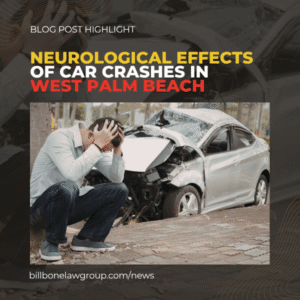
A car accident in West Palm Beach can result in far more than broken bones. When a violent injury occurs, the impact can damage delicate brain tissue, leading to long-term brain damage.
 Whether it is a closed-head trauma or a penetrating brain injury—including even more severe penetrating injuries caused by debris—such injuries often disrupt vital brain function and cognitive abilities. Beyond physical pain, many survivors struggle with sleep disturbances and profound emotional and behavioral changes that impact their families and daily interactions.
In severe brain injuries, victims may face a lifetime of specialized medical treatment and significant lost wages due to an inability to work. Because a delayed symptom can often take days or weeks to manifest, it is crucial for TBI victims to monitor their health closely, as these complications can drastically reduce their overall quality of life.
We represent clients in complex brain injury cases, helping those with a serious head injury navigate Florida’s insurance laws to seek compensation and secure the recovery they deserve.
How Neurological Symptoms Often Show Up
A concussion is a type of traumatic brain injury. The CDC lists symptoms that can affect the body, thinking and memory, emotions, and sleep.
Common symptoms include:
- Headache
- Dizziness or balance problems
- Nausea
- Light or noise sensitivity
- Feeling slowed down, foggy, or groggy
- Trouble concentrating
- Memory problems
- Irritability or unusual emotional changes
- Sleeping more than usual, less than usual, or having trouble falling asleep
That is part of what makes these injuries so easy to underestimate. A person may be able to walk, talk, and go home after the crash, yet still be dealing with a real neurological injury.
Loss of consciousness can happen, but it is not required. Symptoms may also change during recovery rather than staying the same from the first day forward.
Why These Problems Are Often Missed Early
Neurological injuries do not always announce themselves at the scene. This is often the case in a head-on collision where a driver’s head may strike the steering wheel.
 The CDC says some concussion symptoms may appear right away, while others may not show up for hours or days. It also notes that most people improve within days or weeks, but some people have symptoms that last for months or longer.
That delayed pattern matters after a car crash. Someone may think they are simply shaken up, then realize later that reading is harder, screen time triggers headaches, work takes longer, or ordinary conversation feels mentally draining.
You may also begin to notice memory loss or other lingering TBI symptoms, depending on the specific area of the brain affected. In practical terms, the problem is not just pain, though chronic pain often persists long after the initial impact.
It is the effect on concentration, stamina, sleep, and the ability to function normally day to day. Those are often the details that end up mattering most.
When Symptoms Need Immediate Care
Some post-crash neurological symptoms call for emergency medical attention. It is vital to seek medical attention immediately if there is any possibility of skull fractures or if a violent impact occurred to the victim’s head.
The CDC advises getting immediate care for danger signs such as a headache that gets worse and does not go away, blurred vision, repeated vomiting, slurred speech, weakness, numbness, decreased coordination, seizures, unusual behavior, growing confusion, one pupil larger than the other, or drowsiness and inability to wake up.
Recognizing the early onset of these symptoms is essential for preventing long-term damage. Those symptoms should not be brushed off as routine soreness after a wreck. They can point to a more serious brain injury. In severe cases, these symptoms can lead to permanent disability if not treated right away.
If you find yourself in this situation, a West Palm Beach car accident attorney can help you understand how to document these emergency symptoms for your claim.
How Florida Insurance Can Affect a Brain-Injury Claim
 If the neurological injury arose from a motor vehicle crash, Florida’s no-fault law may apply first. Under Florida Statutes § 627.736, personal injury protection, or PIP, generally provides up to $10,000 in medical and disability benefits, including 80 percent of reasonable medical expenses and 60 percent of lost income, for covered accident injuries.
The same statute also requires the injured person to receive initial services and care within 14 days after the motor vehicle accident.
That 14-day rule can be especially important in neurological cases because symptoms are not always obvious on day one. Section 627.736 also limits reimbursement for medical services to $2,500 unless an authorized provider determines that the injured person had an emergency medical condition.
When a Lawsuit May Be Available
Florida law limits when a person injured in a motor vehicle crash can recover pain and suffering and other non-economic damages. Under Florida Statutes § 627.737, the law generally requires proof of a qualifying injury, such as a significant and permanent loss of an important bodily function, a permanent injury within a reasonable degree of medical probability, significant and permanent scarring or disfigurement, or death.
A neurological injury may satisfy that threshold in some cases, but it depends on the medical evidence and the lasting effects of the injury.
Florida also applies a 2-year limitations period to negligence actions, including ordinary personal injury claims. F.S. § 95.11. And under F.S. § 768.81, recovery in a covered negligence action can be reduced by the injured person’s percentage of fault, with recovery barred if that person is found to be greater than 50 percent at fault for his or her own harm.
What To Do Next
If neurological symptoms appear after a crash, a few early steps can make a real difference:
- Get evaluated promptly, even if you never blacked out
- Tell the provider about every symptom, including headaches, dizziness, memory problems, light sensitivity, sleep disruption, and trouble concentrating
- Watch for emergency warning signs if symptoms worsen
- Follow medical advice about rest, follow-up care, and return to normal activity
- Keep track of how the symptoms are affecting work, driving, sleep, and daily tasks
The CDC advises people with a mild traumatic brain injury or concussion to get guidance about when it is safe to return to work, driving, and other regular activities, and to tell a healthcare provider if symptoms do not go away or get worse after returning to normal activity.
Ready to Speak With a Lawyer?
If you or a family member is dealing with headaches, dizziness, memory problems, or other neurological symptoms after a car crash in West Palm Beach or Palm Beach County, Bill Bone Law Group can help you understand the insurance rules, documentation issues, and legal deadlines that may affect your case.
When the effects of a crash are neurological, the seriousness of the injury is not always obvious at the beginning.
Frequently Asked Questions
What are the first signs of a brain injury after a car accident?
Initial signs often include persistent headaches, dizziness, and a “foggy” mental state that disrupts normal brain function. It is critical to monitor for memory loss or emotional changes, as these indicate the injury occurs deep within the brain tissue.
How long do I have to see a doctor after a car accident in Florida?
Florida law requires you to seek medical treatment within 14 days of a car accident to qualify for PIP benefits. Missing this deadline can result in a total loss of coverage for your medical bills and lost wages related to your head injury.
Can I sue for a concussion in Florida?
You can sue if the concussion meets Florida’s “permanent injury” threshold, demonstrating a lasting impact on your cognitive abilities. A West Palm Beach car accident attorney can help you seek compensation before the state’s two-year statute of limitations expires.
Why do brain injury symptoms sometimes appear days after a crash?
Adrenaline often masks trauma immediately after a crash, while physiological changes like brain swelling may take time to manifest as a delayed symptom. This is why TBI victims must stay alert for late-developing signs of brain damage to ensure they receive proper care.